Roncal (Spain)
Roncal is a hard Spanish Sheep Cheese.

Wine Pairing
Roncal is a firm, nutty, and slightly piquant cheese. It pairs best with full-bodied Spanish reds like Tempranillo (Rioja or Navarra) or robust Mencía to match its intensity.
Roncal is traditionally enjoyed with Navarra red wines from the same region.
Our favourite pairing is a Navarra Tempranillo or a Navarra Garnacha.
For a regional match, try Navarra rosados (rosé) or dry white wines like Verdejo.
About Roncal
Roncal is made in one of 7 villages in the Valle de Roncal in the Basque territory of Navarra. It was the first cheese to obtain a Spanish PDO status (1981).
Roncal has been made in the Basque territory for nearly 3,000 years. The sheep herds producing the milk, date back to the thirteenth century.
Roncal has an olive-like flavor with nutty undretones. If you like Manchego, you will also appreciate Roncal.
Excellent Wine Pairings
Navarra Tempranillo
The best match, as regional Navarra red wines complement the nutty, savory notes.
Navarra Garnacha
Garnatcha is another great option if you prefer a fruity, slightly higher alcohol red.
Ribera del Duero
These medium to full body wines, with red fruit flavors, and earthy undertones complements the nuttiness and enhance the savory character of a Roncal.
Mencía
Mencía is a robust, fruity, and slightly acidic red that pairs well with the cheese's firm texture.
Oaked Rioja Blanco
Rioja Blanco, made primarily from Viura grapes, offers a combination of citrus, floral, and mineral flavors with a touch of oak aging.
Rioja Blanco's crisp acidity and complex aromatics complement the nutty and slightly tangy taste of Roncal.
Oaked Chardonnay
A buttery Chardonnay with notes of vanilla and oak can contrast the nuttiness of Roncal while complementing its creamy texture.
Dry Verdejo
Verdejo provides a crisp, acidic contrast to the rich, buttery texture of the sheep's milk.
Sparkling Wines
Cava
Cava, a sparkling wine from Spain made using the traditional method, can provide a refreshing contrast to the saltiness of Roncal.Cava's crisp acidity, fine bubbles, and citrusy notes make it an excellent choice for pairing with this cheese.
Prosecco
The bubbles and acidity of Prosecco can cleanse the palate between bites of Roncal, making it a delightful pairing option.
Champagne
A dry Champagne with its toasty notes and lively bubbles can enhance the flavors of Roncaland elevate the tasting experience.Dessert Wines
The Spanish often pair aged, salty, or robust cheeses with fortified dessert wines from southern Spain, with Pedro Ximénez (PX) Sherry and Oloroso Sherry being the most iconic choices.
Pedro Ximénez (PX) Sherry
A dark, velvety, intense sherry with notes of raisins and figs that pairs beautifully with salty, aged sheep’s milk cheeses like Manchego and Roncal or sharp blue cheeses like Cabrales.
Oloroso Sherry
A savory, nuttier, oxidative style of sherry that stands up to the intense flavors of aged Mahón or 2-year-old Manchego.
Sherry Amontillado
Sherry Amontillado is a dry and nutty fortified wine that enhances the nuttiness of Roncal.
Its oxidative notes and complex flavors of almonds, caramel, and dried fruits create a delicious contrast with the cheese.
All aged cheeses like a good sherry. Richer cheeses like the smoked versions Amontillado or Oloroso.
Malaga (Moscatel de Alejandría)
Malaga dessert wines, made from sun-dried grapes, are aromatic and sweet, working well with robust goat or sheep cheeses.
For a truly authentic, "edgier" pairing, one might try a sweet Malaga or a Cream Sherry with aged cheeses.
Personal Preferences
.jpg)
Enjoy your wine and cheese with local fruits nuts and bread!
Personal preferences play a significant role in wine and cheese pairings, so don't hesitate to experiment to find the combination that suits your taste buds best.
Consider adding some accompaniments like fruit, nuts, or bread to enhance the pairing experience:
- Crusty Bread and Crackers
- Nuts, Peanuts and Fries
- Grapes and Berries
- Olives and Garlic
- Figs and Rasins
- Apple and Honey
- Sliced Pear
- Dark Chocolate
- Rosemary and Thyme
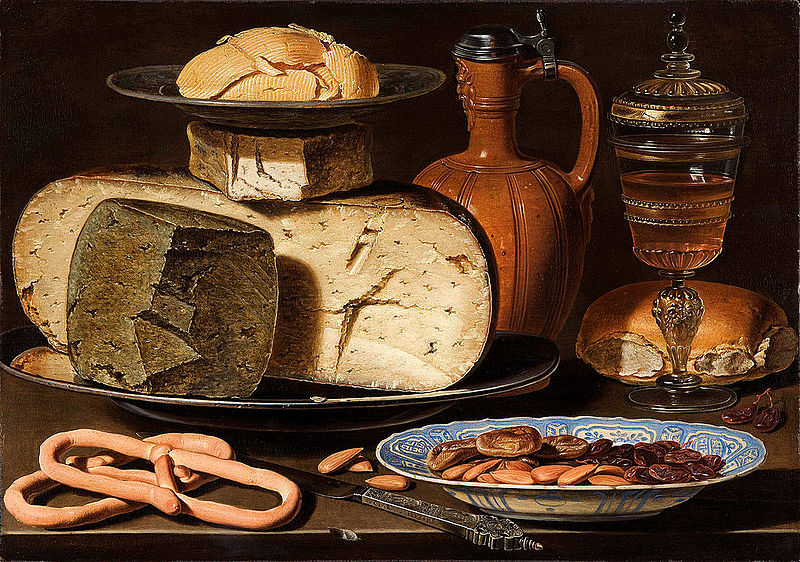
Clara Peeters - Still Life with Cheeses, Almonds and Pretzels 1615
If it Grows Together
If it grows together it goes together.
Pairing locally is a great way to learn more about wine and cheese:
 France
Chèvre from Loire is great with Sauvignon Blanc from Loire.
Munster from Alsace is great with Gewürztraminer from Alsace.
French Sauternes with French Roquefort.
 Italy
Italy
Strong Gorgonzola pairs perfectly with Barolo.
Pecorino pairs well with Chanti.
Pino Grigio goes well with Mozzarella.
 Spain
Spain
Manchego is gorgeous both with Cava and Rioja.
 Alpine
Alpine wines were made with dishes like Raclette in mind.