Wine Pairing
Wensleydale (England)
Wensleydale is a mild and crubly cheese from North Yorkshire.
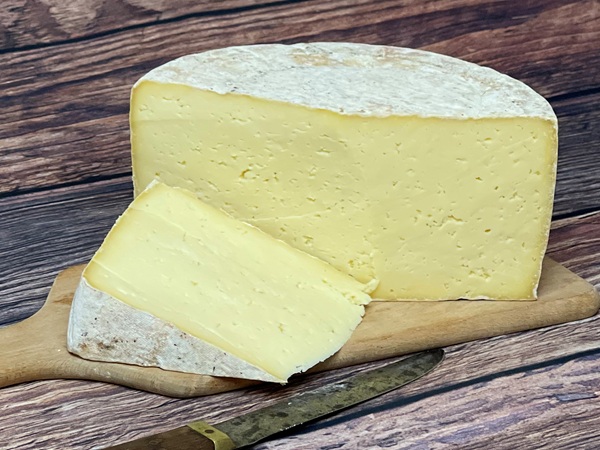
Wensleydale’s mild and crumbly profile makes it highly versatile. White wines are generally the most reliable pairing, but it also handles fruity, low-tannin reds and sparkling wines beautifully.
White Wines
Look for crisp whites with good acidity balance Wensleydale's creamy texture.
Sauvignon Blanc
The crisp acidity and bright citrus flavors of Sauvignon Blanc can provide a refreshing contrast to the creamy texture of a Wensleydale.
Look for a Sauvignon Blanc with herbaceous notes to enhance the pairing.
Chardonnay
A lightly oaked Chardonnay can complement the buttery richness of Wensleydale while adding depth and complexity to the pairing.
Look for a Chardonnay with flavors of ripe apple or pear for the best match.
Gewürztraminer
An aromatic white wine like Gewürztraminer from Alsace can pair nicely with Wensleydale. Its floral and spicy notes can complement the cheese's creaminess.
Pinot Gris
An off-dry Pinot Gris from Alsace, France, with flavors of ripe pear, stone fruits, and honey, pairs nicely with Wensleydale. The slight sweetness of the wine will balance the cheese's tanginess, while the acidity will refresh the palate.
Viognier
Viognier, with its aromatic floral notes, stone fruit flavors, and a hint of sweetness, is an excellent pairing choice for Wensleydale.
The richness and viscosity of a Viognier, will complement the nutty and caramelized flavors of the cheese without overwhelming them.
Red Wines
Avoid heavy tannins, which can clash with the cheese's delicate flavor.
Pinot Noir
A light to medium-bodied Pinot Noir can offer a versatile pairing option for Wensleydale. The wine's bright acidity and red fruit flavors can complement the cheese's creamy texture and subtle sweetness without overpowering it.
Merlot
A soft and fruity red wine like Merlot can be a surprisingly good match for Wensleydale. Merlot's ripe plum and cherry flavors, along with its smooth tannins, can complement the cheese's creamy texture and enhance its flavors.
Beaujolais (Gamay)
A light, fruity red that won't overwhelm the mildness of the cheese.
Special Varieties
If you are serving a flavored Wensleydale, consider these specific pairings:
Wensleydale with Cranberries
Pairs exceptionally well with Prosecco, off-dry Riesling, or a Pinot Noir Rosé to balance the tart fruitiness.
Smoked Wensleydale
Try a rich, welcoming red like Nero d’Avola or Garnacha.
About Wensleydale
The Yorkshire Wensleydale’s history goes back to the early Middle Ages (1150) when French Cistercian monks started producing their own cheese as they settled in Wensleydale.
Back then the monks used sheep’s milk. It is said that they were trying to recreate Roquefort but ended up with a drier, crumbly cheese.
In the 14th century, cow’s milk was used and the taste of the cheese began to change.
In 1536, Henry VIII of England orders the dissolution of monasteries and the Refornation of the Church. To save the tradition the French Cistercian monks passed on the cheese-making techniques to the farmer's wives, who produced a blue version.
During World War II, and for nearly a decade after, most milk in the country was used to make "Government Cheddar", as part of the war economy and rationing politics.
Today the cheese is produced with pasteurised cow's milk with some sheep's milk to add flavor.
Sparkling Wines
Champagne or Cremant
A dry Champagne with its toasty notes and lively bubbles can enhance the flavors of Wensleydale and elevate the tasting experience.
Prosecco
The bubbles and acidity of Prosecco can cleanse the palate between bites of Wensleydale, making it a delightful pairing option.
Sekt
Sekt is the German term for sparkling wine. It is produced in Germany, Austria, and other German-speaking regions.
It has a variety of styles, from dry to sweet, and is made using different methods and grape varieties. Deutscher Sekt is made exclusively from German-grown grapes.
Dessert Wines
Pairing dessert wines with semi-hard cheeses offers an interesting contrast between the slight firmness of the cheese and the sweet, sometimes rich profiles of the wine.
Sauternes
Sauternes is a luxurious French dessert wine made from Semillon, Sauvignon Blanc and Muscadelle grapes. The wine's honeyed sweetness and rich flavors of apricot and peach can complement the cheese's savory richness, creating a harmonious pairing.
Fortified Wines
Fortified wines are an excellent match for semi-hard cheeses because their higher alcohol content and concentrated flavors can stand up to the cheese's density and salt.
Madeira
The rich, nutty and caramel-like flavors of Madeira can stand up well to the denser, often nuttier profiles of semi-hard cheeses. This wine's robust character complements Wensleydale best if it has a bit of age.
Amontillado or Palo Cortado Sherry
These are considered the "gold standard" for semi-hard cheeses. Their oxidative, nutty notes (almond, hazelnut) mirror the savory complexity of these cheeses.
Sherry Oloroso
Slightly sweeter and richer than Amontillado, Oloroso Sherry works well with older or more flavorful Wensleydale, as it complements the intensity and complex flavors.
Tawny Port (10-Year)
This is a versatile favorite for semi-hard cheeses like Gouda, Gruyère, and Cheddar.
The caramel and dried fruit flavors in the Port complement the cheese’s sweetness and nutty undertones without being as overwhelming as a Vintage Port.
Personal Preferences
.jpg)
Enjoy your wine and cheese with local fruits nuts and bread!
Personal preferences play a significant role in wine and cheese pairings, so don't hesitate to experiment to find the combination that suits your taste buds best.
Consider adding some accompaniments like fruit, nuts, or bread to enhance the pairing experience:
- Crusty Bread and Crackers
- Nuts, Peanuts and Fries
- Grapes and Berries
- Olives and Garlic
- Figs and Rasins
- Apple and Honey
- Sliced Pear
- Dark Chocolate
- Rosemary and Thyme
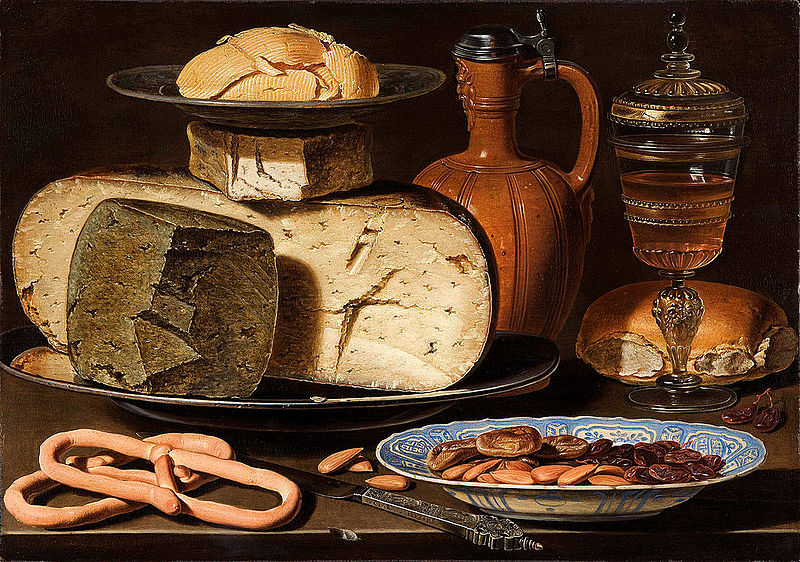
Clara Peeters - Still Life with Cheeses, Almonds and Pretzels 1615
If it Grows Together
If it grows together it goes together.
Pairing locally is a great way to learn more about wine and cheese:
 France
Chèvre from Loire is great with Sauvignon Blanc from Loire.
Munster from Alsace is great with Gewürztraminer from Alsace.
French Sauternes with French Roquefort.
 Italy
Italy
Strong Gorgonzola pairs perfectly with Barolo.
Pecorino pairs well with Chanti.
Pino Grigio goes well with Mozzarella.
 Spain
Spain
Manchego is gorgeous both with Cava and Rioja.
 Alpine
Alpine wines were made with dishes like Raclette in mind.