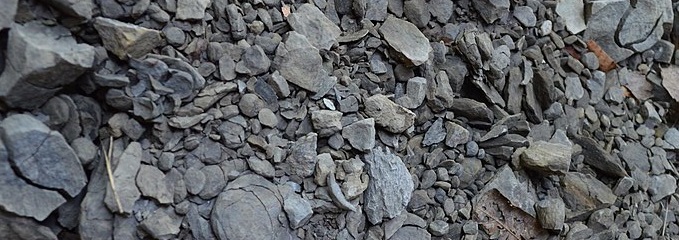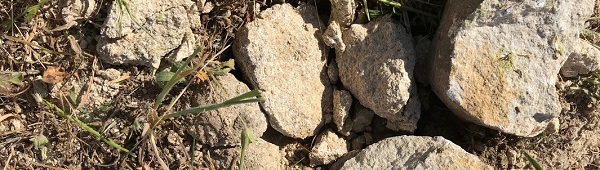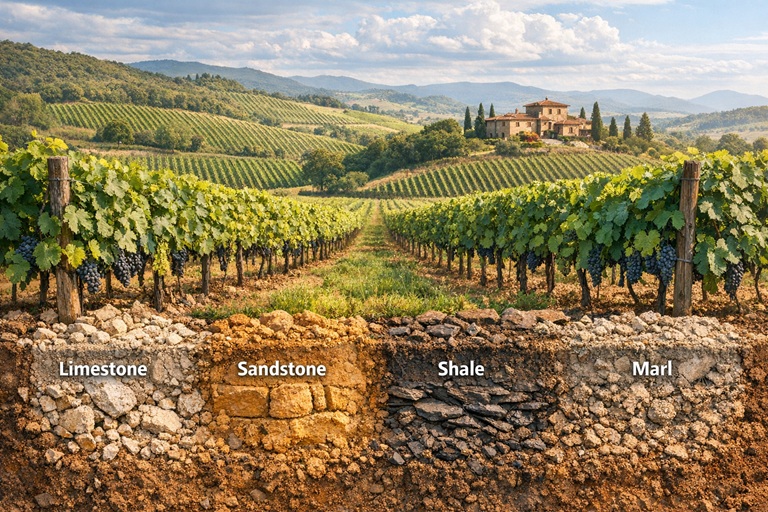
Sedimentary soils are created as layers in lakes, rivers, or in the sea.
Sedimentary soils are composed from pieces of rock, sand, silt, clay, seashells, skeletons, and many other types of organic deposits.
Lime accumulate under pressure to Limestone
Sand accumulate under pressure to Sandstone
Marl accumulate under pressure to Marlstone.
Mud accumulate under pressure to Mudstone
Famous Limestone Buildings:
Sphinx of Giza
The Great Pyramids
The Parthenon, Greece
The Colosseum, Rome
The Empire State Building, New York
Limestone are sediments of calcium carbonates from organic matter like fossils and shells.
Some wine regions are famous for their specific limestone soil, which contribute significantly to the unique characteristics of their wines.
Some of the best wines in world grow in limestone soils: Champagne, Chablis, Sancerre, Saint Emilion.
Limestone is good at absorbing water and releasing it slowly to the vine roots when it is needed.
Even if the vine roots cannot penetrate the hard layer of stone, there are deep cracks in the limestone. The vine roots will channel down these crackssearch for water and nutrients and create a deeper root systems.
For premium winemaking, limestone soils are considered a true gem due to water holding in dry weather and drainage in wt weather. The soil reflects sunlight, promotes photosynthesis and increases nutrient exchange between soil and vine. Wines tend to be aromatic and elegant.
Limestone is consistently alkaline and is generally planted with grapes of high acidity levels, creating wines of minerality and acidity.
The Paris Basin (Bassin Parisien) is the most famous limestone belt. It runs through the centre of Loire, Burgundy, Champagne, and then to south of England (where the wine industry is beginning to make the most of it).
Grapes:
The sedimentary rocks in the Champagne region are 75% limestone.
Saint-Émilion in Bordeaux has a limestone plateau around the town of Saint-Émilion.
Two major types of soil are found in Chablis:
Kimmeridgian limestone is a mix of clay, limestone, and marine fossils.
Portlandian limestone is more limestone and less clay.
The Meursault wine appellation in Bourgogne (Chardonnay, Pinot Blanc, Sauvignon Blanc) has a soil of clay and limestone, with a topsoil of loess and schist.
The Mâconnais wine region in Bourgogne is characterized by limestone hills. The soil is alkaline limestone-based clay with a high content of iron and minerals.
Sussex, Kent and Surrey in England have chalky limestone soils similar to Champagne.
Limestone is the main soil type in the Zinnkoepflé region of Alsace.
Other Regions:
Each terroir type imparts properties to the soil, affecting water retention, drainage, mineral content, and influence the vine health and the grape characteristics.
The proportion of each type contributes to the a unique terroir of each vineyard.
Chalk is a very porous and soft limestone.
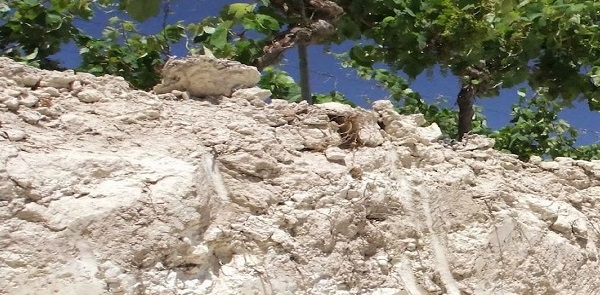
Chalk soils are rich in calcium carbonate and have a high pH. They provide excellent drainage and are often associated with high-quality wines.
Chalk is a porous limestone that vine roots can easily penetrate. Chalky soils works best for grapes with high acidity levels, and can impart minerality to the grapes, contributing to the wine's complexity.
Best known Regions:
Kimmeridgian soil is gray limestone soil originally identified in Kimmeridge in England.
It is composed of clay and fossilized oyster shells.
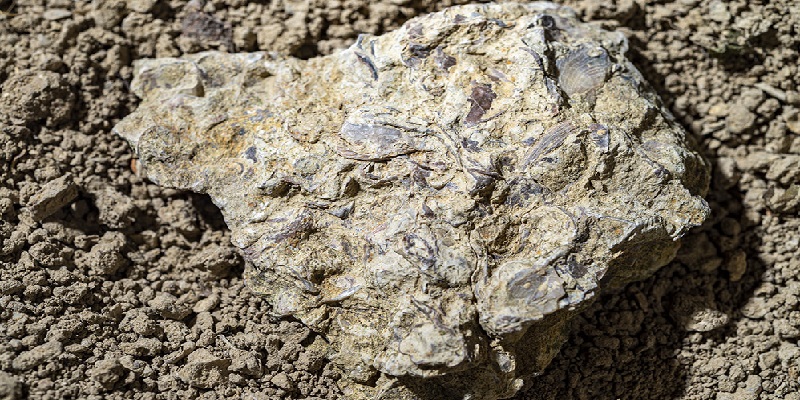
During the Kimmeridgian age (150 million years ago), warm sea led to an accumulation of carbonate deposits mixing with terrestrial erosion elements, such as clay. This explains the presence of marl oyster fossils in Kimmeridgian soils.
Best known Regions:
In 1904, Professor Georges Chappaz found tiny comma-shaped oyster fossils (Exogyra Virgula) in the subsoil of Chablis (france). Forming banks of limestone, these fossilized shellfish from the Jurassic era are combined with gray marl, a lime rich mudstone. Chappaz classified this as Kimmeridgean soil (from Upper Jurassic era 145 million years ago), observed for the first time in Kimmeridge in England.
The oldest soils in Chablis are Kimmeridgian. They contain the highest degree of mineral-rich clay with marine fossils resulting in high chalky content. The "minerality" of Chablis wines has traditionally been linked to Kimmeridgian soils. Most of Chablis’ vine growers agree that the "mineral" component of their resulting wine is related to the Kimmeridgian soils and its interaction with the Chardonnay grape.
Chablis' Grand Cru vineyards and Premier Cru vineyards are planted on Kimmeridgean soil, while Petit Chablis appellations are mainly grown on Portlandian soils (see below).
Fossils in the Kimmeridgean subsoil of Chablis.
During the Portlandian age (135 million years ago), the sea level was much higher, terrestrial erosion were rarer and the limestone formed was much harder.
Because of this, Portlandian limestone is not so rich in clay and fossils, and produces wines that are less mineral, but more fruity.
Best known Regions:
Albariza Limestone has similar characteristics to the soil in Chablis and Champagne.
In Jerez, an algae called diatoms, were deposited during the formation of the Guadalquivir river. Later when the seawater receded, the skeletons were deposited, forming the chalky albariza soils which Jerez is known for today.
Albariza soil covers 90% of the Jerez Sherry vineyards. This chalky soil stores the winter rain and distributes the moisture to the vines in the dry season.
Calcareous is an adjective meaning "mostly or partly composed of calcium carbonate", in other words, containing lime or being chalky. The term is used for a wide variety of vineyard soils:
| Name | Description |
|---|---|
| Calcareous Clay | Clay soil with high limestone content. |
| Marl | A calcareous-clay-based combination of limestone and clay. |
| Kimmeridgian marl | Calcareous clay with Kimmeridgian limestone (fossilized oysters). |
Calcareous soil is alkaline soil with high levels of calcium and magnesium carbonate. It is typically cool in temperature and provides good water retention and drainage.
Calcareous clay soils have high limestone content, which neutralizes the natural acidity of the soil. However, the cool temperatures of the soil normally delay ripening in the grape, which tends to produce more acidic wines.
Marl is a calcareous-clay-based combination of limestone and clay.
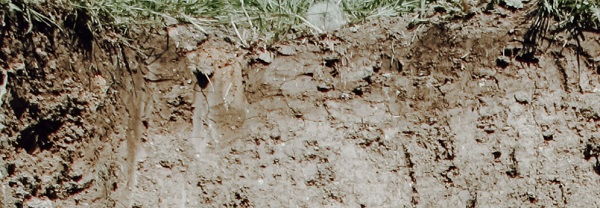
Marl adds acidity to wine, and vines planted in Marl soil normally ripen later than in other soil types.
Marl is found in Burgundy (France) especially in the Côte d'Or region, where it provides a fertile base for Pinot Noir and Chardonnay.
Alsace represents a mosaic of vineyard soils from limestone to marl, clay-marl, marl-limestone, granitic, schist, sandstone, loess and alluvial soils.
Marl is the main soil type in the Piedmont wine region of Italy.
In geologic timescale, Kimmeridgian is in the Late Jurassic Epoch between 157 and 149 million years ago. The Kimmeridgian follows the Oxfordian and precedes the Tithonian.
Kimmeridgian Tyrannosaurus Rex
Kimmeridgian marl is calcareous clay with Kimmeridgian limestone.
The rock comes from the sea, and is rich in fossilized oysters.
While working in Dorset near the town of Kimmeridge in the south of England, French geologist Alcide d'Obigny, identified a unique layer of dark marl which he named Kimmeridgian. The layer runs from the North Sea to the Paris Basin.
Kimmeridgian marl forms the bedrock of the Centre-Loire's wine regions. Locally, the soil is known as terres blanches (white earth).
Terreblanche in Sancerre.
Terres Blanches is considered a good "late-ripening" terroir. It is made of thick clay layers covered with flat limestone stones, rich in fossils, that have the particularity of whitening while drying in the sun. The terroir gives a strong aromatic concentration, tension and ageing potential to the wines.
Mudstone is a fine-grained sedimentary rock that plays a crucial role in vineyard soils by contributing to water retention, nutrient availability, and imparting a potential mineral character to the wine.
Mudstone, which is essentially ancient, consolidated mud (a mixture of silt and clay particles), forms an argillaceous (clay-based) soil. Its key characteristics and impact on viticulture include:
Best known Regions:
Marlborough (New Zealand)
Greywacke, which includes layers of mudstone, is common here,
contributing to the region's famous Sauvignon Blancs.
Chianti Classico (Italy)
The specific local soil type called galestro is a schistous (flaky) clay/mudstone that crumbles easily
and is associated with characterful Sangiovese wines.
Chablis (France)
The famous Kimmeridgian soils in Chablis are a type of grey marl (a lime-rich mudstone) that contributes
to the unique subtle, mineral character of its Chardonnay wines.
Paso Robles (California)
Various marine sedimentary rocks, including mudstone and calcareous shales, are found here and contribute to the region's diverse terroir.
Germany and South Africa
Mudstone-containing soils are also found in vineyards in Germany and South Africa.
Albarese and Galestro are grey rocks found in clay sediments in the central and southern part of the Chianti region in Toscana in Italy. They are weathered sandstones with a high proportion of calcium carbonate (limestone). They are crumbly and flake easily under rain and sun, releasing nutrient minerals to the soil.
Alberese (nearly white) is found in the valley floors.
Galestro (nearly yellow) is found at the highest altitudes.
Galestro soils tend to deliver wines with a more robust fruit character, while wines made from Alberese soils can be more mineral.
Albarese is a hard, compact limestone (calcareous rock) that is rich in calcium carbonate. It is essentially weathered sandstone with high limestone content and appears nearly white when found in the valley floors.
This soil provides excellent drainage and moisture retention due to its composition, which helps vines develop deep root systems. It is less fertile than clay-heavy soils, leading to lower grape yields but higher flavor concentration.
Grapes grown in Albarese soil tend to produce wines that are savory and mineral-driven, with a sharper, more refined structure, vibrant acidity, and firm tannins.
Galestro is the local name for a grey, flaky, schist-like marlstone (or argillite) that is unique to Tuscany. It is a rock formation of stone and sand that is not fully compact clay but will eventually become clay.
Though it appears hard, Galestro is soft and flakes easily under rain and sun, which helps aerate the soil and allows roots to penetrate easily.
Galestro holds water. It allows Sangiovese to ripen without suffering heat stress in areas like Montalcino and Chianti Classico.
Galestro soils typically yield wines with a more robust fruit character, enhanced intensity, aromatic complexity, power, and pronounced minerality and depth.
Galestro gives darker and richer wines compared to Alberese.
Dolomitic Limestone contains both calcium and magnesium carbonate. It is less common, but Northern Italy has soils rich in dolomitic limestone, contributing to the unique mineral profile of its wines. Parts of Burgundy in France also have deposits of dolomitic limestone.
Best known Regions:
Sandstone is a sedimentary rock composed of sand particles formed to stones by pressure.
Best known Regions:
Cambrian greenstone soils (unique to the area Heathcote in Australia) are recognised as some the world's oldest soils.
Formed by underground volcanoes 600 million years ago, these ancient soils are highly rich in minerals that form the building blocks for the molecules of colour and flavour in red wine.
Alcohol can be addictive. Always drink in moderation.
© Copyright 2015-2025 W3 Wine School. All Rights Reserved.