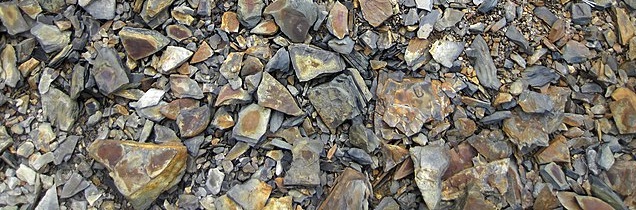
Vineyard Soils
Rocky Soils

Rocky soils can range from small pebbles to large stones.

Rocky soils are very porous
Rocky soils have great drainage
Rocky soils retain heat very well
Rocky soils have poor water retention
Rocky soils are very infertile
Rocky Soils
Rocky soils are very infertile.
In rocky soils, the roots of the vines must dig deep to reach water and nutrients. This causes great levels of stress on the vines, and stress is often good for vines.
Stressed vines produces grapes with rich and intense flavors as well as good acidity. In cooler climates, rocks and stones are an important part of ripening grapes in that they absorb heat from the sun reflect it back to the vines. Notable Regions: Bordeaux’s Left Bank (Medoc, Graves), Châteauneuf-du-Pape (those famous galets!), Piedmont.
Bordeaux Pebbles
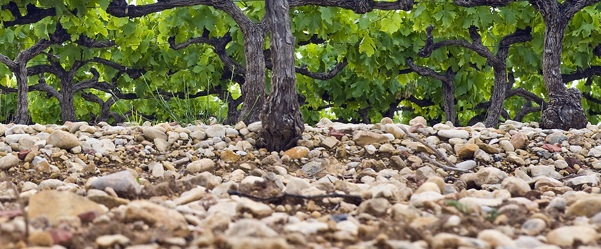
Rolled Pebbles
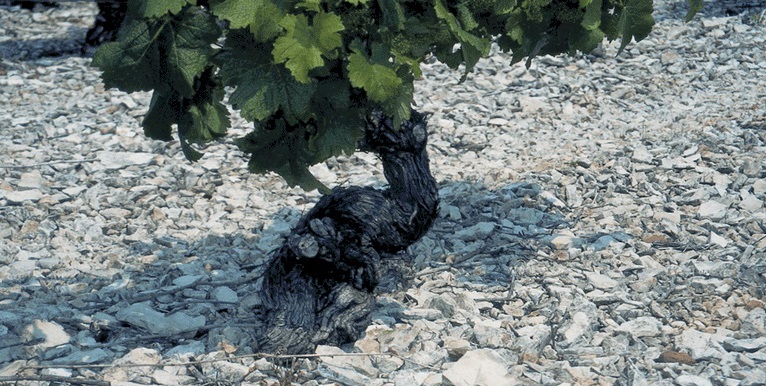
Galets Roulés (Rolled Pebbles) soils have larger, rounded, smooth stones, polished by the water in a river.
Galets roulés are a distinguishing feature of many of the vineyards in the Côtes du Rhône South, more specifically the Châteauneuf-du-Pape AOC, Gigondas AOC and Vacqueyras AOC.
Grenache expresses itself perfectly in these sun-warmed soils, even during the night, because the stones absorb the heat from the sun during the day and releas that heat slowly overnight.
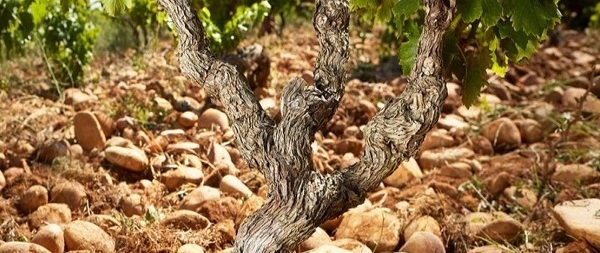
Rolled pebbles in Châteauneuf du Pape
Polished by the waters of the Rhone
Flint Gravel
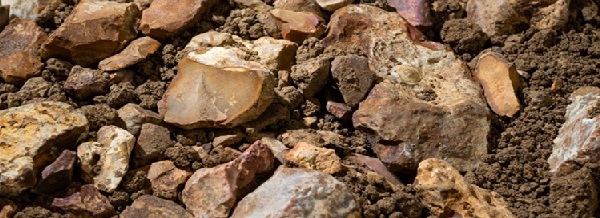
Flint is a siliceous stone that stores and reflects heat. It is often associated with a "flint" smell that sometimes occurs in wines.
Flint Gravel soils are common in Pouilly-Fumé and the eastern edge of Sancerre in Loire.
Sauvignon blanc loves this soil, heated at the surface by the flint from which it derive its mineral expression. This soil is also called Chailloux in Centre-Loire vineyards.
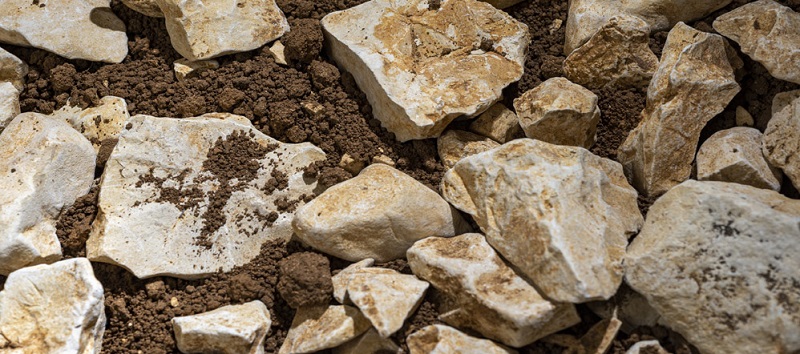
Calcaires - Hard Limestone
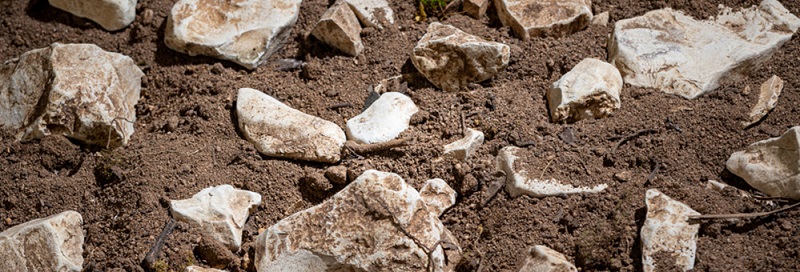
Clay Siliceous Sand
Silex (Pouilly Fumé, Loire)
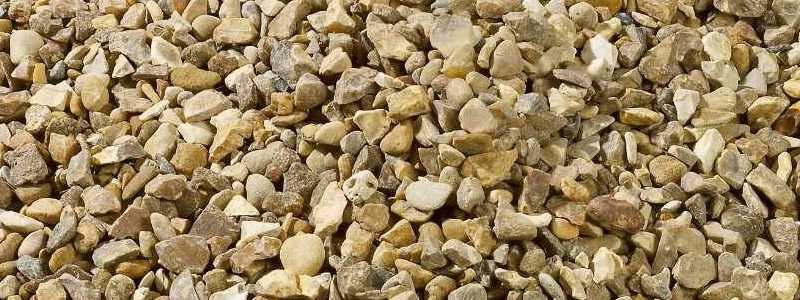
Silex is a flint-rich soil made from clay, limestone, and silica (quartz). It is a type of sedimentary soil known for its hard, glassy stones that often look metallic.
The flint stones in silex soil absorb and reflect heat, which helps ripen grapes.
"Argiles à Silex" (flint clays) is often associated with a "flint" smell that can occur in wines.
"Fumé" is French for "smokey". The old name for Sauvignon Blanc (Blanc Fumé) is said to describe this. The old name for Pouilly Fumé was "Blanc Fumé de Pouilly".
Silex is mainly found in the Loire Valley in France, especially in areas around Pouilly-Fumé.
Oxfordian Limestone
Oxfordian limestone from the Jurassic Period, 163 to 155 million years ago, is found in the form of a bed of white stones that are flat as they were shattered by frost. Rain washed the surface earth away, leaving the little stones or caillottes that are so characteristic of Sancerre’s hills visible at the surface. Wines produced from grapes grown in this type of soil are young, fruity and pure.
Oxfordian limestone are very stony soils, but unlike Silex, there is little or no flint in the Oxfordian soils, and unlike Kimmeridgian, there is relatively little clay.
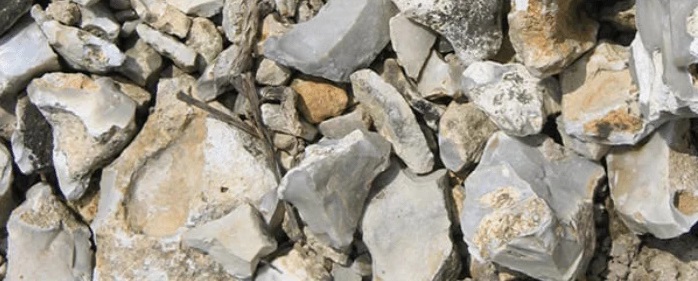
Best known Regions:
- Sancerre (Loire, France)
Caillottes (Sancerre, Loire)
Caillottes is a soil of fragments of coarse Kimmeridgian limestone.
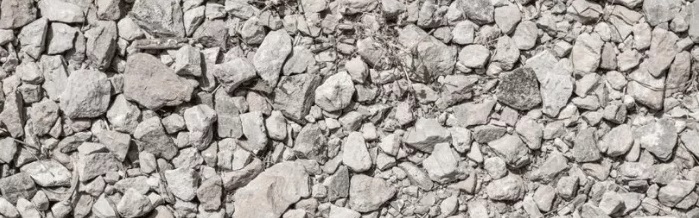
Caillottes in Sancerre
Shale
Shale is a fine-grained, sedimentary rock formed from the compaction of clay, silt, mud and organic matter. It is usually considered equivalent to mudstone.