Canadian Wine
Canada has a thriving, multi-billion dollar cool-climate wine industry.
Together, Ontario and British Columbia make up about 98% of the country's total wine production.
The country spans over 31,000 acres of vineyards and operates over 600 wineries.
Grape Varieties
Winemakers use classic European vines (Vitis vinifera) and hardy hybrid grapes engineered to survive deep winter frosts.
White Wine Grapes
Riesling and Chardonnay thrive in the cool air, producing crisp, high-acidity profiles. The Vidal Blanc hybrid grape is widely planted for sweet styles.
Red Wine Grapes
Pinot Noir and Cabernet Franc do well in cooler zones.
Warmer pockets (South Okanagan) ripen heavier reds like Merlot, Cabernet Sauvignon, and Syrah.
Wine Regions
Canada's wine regions sit between 41 and 50 degrees latitude north, putting them on the same paths as famous European regions like Burgundy and Chianti.
Production is legally overseen by the Vintners Quality Alliance (VQA) system to guarantee quality and origin.
Wine Country Ontario
The largest wine region, handling 60% to 70% of national volume.
Its signature zone is the Niagara Peninsula, alongside Lake Erie North Shore and Prince Edward County.
British Columbia
The second-largest region with about 33% of the production.
The crown jewel here is the Okanagan Valley, but it also includes the Similkameen Valley and smaller coastal pockets like Vancouver Island.
Climate & Microclimates
Though Canada is classified broadly as a cool-climate wine nation, the local geography creates highly unique growing conditions.
The Lake Effect
In Ontario, the deep waters of the Great Lakes act like a hot water bottle. They trap summer warmth to extend autumn ripening and blow warm breezes across the banks to prevent early spring frosts.
The Desert Shadow
The inland Okanagan Valley in British Columbia sits in a mountain rain shadow. It is technically a semi-desert with very low rainfall but enjoys incredibly intense, long summer daylight hours that supercharge grape sugar production.
Extreme Winters
Deep freezes pose real dangers to the vines. Wineries combat this by using giant wind machines to pull down warmer air pockets or by applying natural protective plant hormones to prevent bud damage.
Flagship Icewine
Canada is the undisputed global king of Icewine, producing more of this sweet dessert luxury than all other countries combined.

Strict laws dictate that icewine grapes must be left on the vine until temperatures naturally plummet to -8°C (17.6°F) or colder.
They are hand-picked frozen solid, usually in the middle of the night, and pressed immediately.
Because the water content stays locked up as ice shards, only a few highly concentrated, ultra-sweet drops of syrup escape. This low yield makes genuine Canadian Icewine a highly sought-after premium export.
Canada: The Volume Leader
Canada's reliable, deeply continental winter climate ensures a harvest every year.
About 80% to 90% of Canadian icewine comes from Ontario, particularly the Niagara Peninsula.
They primarily use the Vidal Blanc grape, resulting in rich, highly concentrated, and tropical flavors.
Canadian vintners were also the first to legally trademark the term "Icewine" as a single word.
Germany: The Historic Pioneer
Eiswein was accidentally discovered in Germany in the late 18th century.
Because Germany's climate is milder, deep freezes do not happen every year, making German Eiswein a rare, vintage-dependent stroke of luck and highly sought after.
German producers primarily use Riesling, which is known for higher acidity balancing its intense sweetness.
Germany is the historic birthplace of the style (known as Eiswein) and is highly respected for its premium quality.
Canada is in the New World
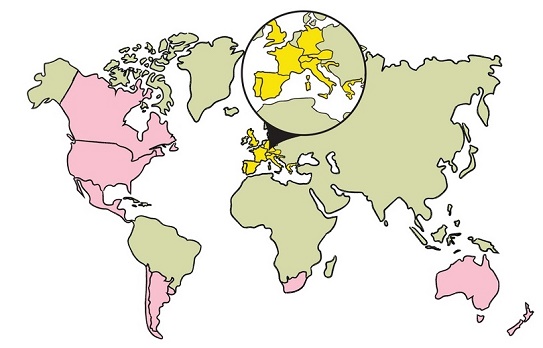
The New WorldWhere wine production was imported |
| USA |
| Argentina |
| Australia |
| Canada |
| Chile |
| South Africa |
| New Zealand |